Tuesday, January 14, 2014

Discovering A Topnotch Concrete Scanning Company


Needing a concrete scanning company is something that the majority of companies and homeowners will never ever require however when you need one it is important to discover the best one in your general local area.
Businesses that supply concrete scanning are normally specialists at scanning but there are some business that aren't as good as others.

Some individuals will employ the initially company that they discover but I suggest that you in fact do some research. The type of research that I recommend is for you to make up a list of around twelve concrete scanning companies in your area. Your objective will be to cut this list down to only the very best 3 or 4 business. The technique that you will use to do this is to make use of Google and other company review sites that allow past consumers to rate businesses. The very best ones permit customers to leave a few paragraphs about the business.


We are undoubtedly searching for a means to stay clear of bad companies and to just deal with business who have an excellent reputation. These reviews are surprisingly great and can assist you get to the core of what a business is everything about. Call each business to see exactly how you like them and then call them out for an estimate as soon as you have your list knocked down.

Following the process that has actually been supplying in this article will enable you to find the very best concrete scanning business in your company to have this sort of work done. Best of luck with your search.

54 Hooker Blvd
Broadbeach,
QLD
4218
Contact us: 0426 508 755

Concrete X-Raying Now


I know there might be concerns about what we are stepping on. so many structures are built up around us without any care as to weather there might be something valuable underneath. When you are looking for the right way to look through something that can not easily be broken or should not be broken you might want to look into concrete X-raying.

If there were diamonds under your office building or parking lot don't you think you should know of it? If you find a lot of them, it might be worth taring the hole place down. I need you to think of all the possibilities when it comes to looking at the unseen.

There are other reasons to figure out what may or may not be under the concrete around you. When you choose to go with concrete X-Raying your mind will be set at ease once you learn that your parking lot or office building is set on a solid structure.

There might be historical items under your office building that you were unaware of. Of course, you might not be willing to break concrete to go get them, but who know?

If you are looking for a quality company to help you with all of your concrete
X-Raying needs all you have to know how to do is use Google.. Please look up the best reviews possible so you know you are getting the right company. Don't waste your money, get the right people for the job.

When you are looking for the right way to look through something that can not easily be broken or should not be broken you might want to look into concrete X-raying.

When you choose to go with concrete X-Raying your mind will be set at ease once you learn that your parking lot or office building is set on a solid structure. If you are looking for a quality company to help you with all of your concrete X-Raying needs all you have to know how to do is use Google.

C.S.I.Concrete Scanning & Investigation
54 Hooker Blvd
Broadbeach,
QLD
4218
Contact us: 0426 508 755

Sunday, December 29, 2013

Finding Underground Utilities


Whether you are going to be digging around your home for house renovation functions or you are in requirement of repairs on your septic system, you will desire to make sure that you understand where any of your underground utility detection. Not finding the underground energies prior to digging might trigger a harmful scenario or expense you an entire lot more money in repairs.

For the most part, you are going to see that colored lines or flags are utilized to help mark the location or to denote the presence of particular kinds of underground utilities. In case of a flag, there is often a logo design that is on it that will inform the municipal utility or company that have actually utilities set up beneath.

Whether it is wires below the ground, lawn sprinkler or piping, it is very important that they are effectively marked to help stop any opportunity of a mishap from happening. These location approaches are crucial in case there is any sort of absence of information on outdated maps in the area. When you have the underground energies appropriately marked, you are going to have the ability to determine exactly where they are so that the correct amount of clearance can be offered to help cover all bases.

54 Hooker Blvd
Broadbeach,
QLD
4218
Contact us: 0426 508 755
Sunday, December 22, 2013

Concrete Scanning Can Identify Metal Objects Underground


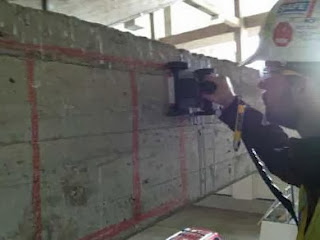
In any excavation project, if underground objects can be detected, a great deal of trouble, money and time can be saved. A technology called GPR, or ground penetrating radar, can perform a subsurface imaging scan in order to provide the evaluation of a site prior to beginning the excavation.

This scanning system can locate utilities that are buried underground, obstacles and debris, bedrock, old foundations and other underground debris. The technology specializes in finding both metallic and non-metallic utilities including copper, PVC, concrete and plastic pipes and in addition various conduits that in many cases can not be detected in any other way.

This is an ideal way to locate the position of buried utilities, storage tanks, drums, and man made items such as old roads, runways and underground buildings using the exciting technology. Obvious, if you discover a utility line that is underground, and for some reason it is not on anyone's map or chart, you will be glad that you uncovered it.

The process is not hazardous to the operator of the machine doing the scanning, as it emits only 1 % of the power of a cell phone signal.

The system operates by the sending of a small pulse of energy into a material through an antenna. The strength and the time that the signal takes to return to the device will create reflections that are then picked up by the recovery system and stored on digital media. The reproductions then come out as visual replications of the object, such as man-made objects of pipes, wire, tanks, and the like.

When it comes to locating and identifying non-metallic and metallic objects of various sizes and shapes, this system is very accurate.

GPR has been in existence for the past 40 years, and of course there have been improvements over the years, but it has saved many an excavation project precious time and money by its availability.

54 Hooker Blvd
Broadbeach,
QLD
4218
Contact us: 0426 508 755

Monday, December 9, 2013

Easy Ways to Measure the Thickness of a Concrete Can Help to Ensure Quality and Forecast Problems During Any Modifications to a Slab


Engineers quite often find the need to measure the thickness of a concrete slab, when they require making some modifications to the slab. They may also need such information when they are planning any additions, or have doubts about the structural stability of the slab to bear present or future loads. When a non destructive method of measuring the thickness of a concrete slab can be of great advantage, this is.


Such non destructive testing enables the information to be obtained without having to conduct on site breaking of a slab or even taking cores to get the information. This reduces any need for future repairs to the damaged portion of the slab, which is in a sense weakened by such actual breaking of the concrete. One of the most common of these devices uses ultrasonic frequencies or other systems that propagate vibrations.

The vibration generator produces frequencies varying from 1,000 c/s to 4,000 c/c and these are made to act vertically on the slab whose thickness is required. These vibrations are detected by a pick-up device, which is then moved around till the vibrations of the generator and those detected in the pickup are in phase. These measuring devices are all hand held and battery powered, which makes their use very versatile and allows their use in the most restricted of situations.

Concrete slab measurements are quite often required to ensure quality control in pavements, tunnel linings and other structures that have a continuous plate. These instruments are calibrated using them on slabs whose thicknesses are known and confirmed. Both thin and thick slabs can be measured, and while for thin slabs the range that can be detected varies from 2.8 t0o 22 inches, when the thick mode is used, slabs can be between 10 and 60 inches.

Quality assurance and control engineers use these devices constantly in pavements and linings that are difficult to measure after the work is in place, because one side of the slab is no more approachable or visible once the work is completed. Frequently when holes are needed to be drilled in existing slabs to introduce additional services, these devices may be used in conjunction with rebar locators so that the any drilling that is done is done with the full knowledge of what is likely to be encountered during the operation.

Engineers quite often find the need to measure the thickness of a concrete slab, when they require making some modifications to the slab. These instruments are calibrated using them on slabs whose thicknesses are known and confirmed. Both thick and thin slabs can be measured, and while for thin slabs the range that can be detected varies from 2.8 t0o 22 inches, when the thick mode is used, slabs can be between 10 and 60 inches.

C.S.I. Concrete Scanning & Investigation
54 Hooker Blvd
Broadbeach,
QLD
4218
Contact us: 0426 508 755

Concrete Strength and Density Testing Is Very Important to Determine the Safety of Reinforced Concrete Structures


Concrete is such a versatile material that it is very extensively used to build many structures, whether they are for residences, commercial properties, factories, bridges, dams, roads or any structure that requires a durable and strong material. This makes the strength of the concrete being used very vital to ensure the safety of structures.

Most engineers prefer the concrete strength testing during the production stage. The mix of the concrete is decided by earlier testing of the various ingredients that will be used to make the concrete. Designing the concrete mix which will give the weights or volumes of the various materials, like aggregates and cement is done on an empirical basis. These mixes are then made in the laboratory where the desired strength and density of the concrete is then tested. The accepted standards required by the designers, allow this concrete mix to be then suggested to the engineers carrying out the construction. It is then a responsibility of the construction engineers to ensure that the concrete that is manufactured and poured reaches the required strength and density as required by the laboratory and designers.

Normal construction procedures require that samples of the concrete being used is poured into molds to form blocks that can be used to test the strength of the concrete that has been poured into the structure. Concrete gathers strength over time and standards have been set that requires certain strengths to be developed by the concrete over periods of 3, 7 and 28 days.

The weight of each block is then taken to arrive at the density of the concrete. The block is then subjected to compressive stresses in testing machines to arrive at its strength. This strength is the one obtained when the block is tested to destruction. A number of blocks are taken for each batch of concrete, while tabs are also kept on where this particular batch has been used in the structure. These strengths of all the tested blocks and their densities are noted. They are required to be as per the strengths suggested by laboratory recommendations.

At times, when the tests show results below what is required, engineers may prefer to go in for other non destructive tests to establish the strength and density of the concrete. There are various methods like rebound hammers, and ultrasonic testing that are in wide use. In very rare cases, quality control engineers may insist on actual load testing of the structure by using dead weight or hydraulic forces and checking that the deflection caused is within accepted standards.


The mix of the concrete is decided by earlier testing of the various ingredients that will be used to make the concrete. Normal construction procedures require that samples of the concrete being used is poured into molds to form blocks that can be used to test the strength of the concrete that has been poured into the structure. Concrete gathers strength over time and standards have been set that requires certain strengths to be developed by the concrete over periods of 3, 7 and 28 days. At times, when the tests show results below what is required, engineers may prefer to go in for other non destructive tests to establish the strength and density of the concrete.

54 Hooker Blvd
Broadbeach,
QLD
4218
Contact us: 0426 508 755

Sunday, December 8, 2013

Location of Rebar in a Reinforced Concrete Structure Is Very Important While Carrying out Modifications


Concrete has a very high compressive strength compared to its tensile strength which is very low. It is possible to increase this tensile strength by introducing rebar in to concrete to make a reinforced concrete structure which can then take both compressive and tensile stresses and make for structures that have strength and durability.


Concrete lends itself very easily to be molded into any shape that is desired, because when it is first manufactured it is in a plastic state, which over a short period of time hardens, while continually developing strength. CSI finds rebar etc in concrete to reinforced concrete needs to be put at very specific locations so that it allows the structure to have the required tensile strength. This is done by using spacers and other devices to lock rebar into the specific required locations, which remain so, even when the fluid concrete is poured into the formwork that makes up the shape of the desired structure. It can be in columns, walls, beams, slabs or any shape desired. Building codes determine the distance this rebar needs to be at from the surface of the concrete. Rebar is made of steel which is vulnerable to rust from atmospheric conditions. This is why rebar needs to be kept at a certain distance within the concrete to prevent any rust formation. Rust formation can cause rebar to lose its form and strength and thus affect the strength of the reinforced concrete structure.

When this requires the concrete structure to be drilled through or partially, it is very important to make sure that any such modification is not hampered by the presence of the rebar. It then becomes very important to know the exact position of the rebar, so that any drilling or breaking done does not come across a rebar.

Technologies are available that allow the location of the rebar in concrete to be pinpointed, without any necessity for damaging the concrete to locate the rebar. These concrete scanning operations use ground penetrating radar to locate rebar. This allows the exact location for the rebar to be established so that any subsequent operations can avoid damaging them. There are times, when a structure is showing signs of distress, and at such times one of the first things that engineers do is check on the position of the rebar, as any shift from previously designed parameters can lead to weaker structures. Location of rebar in concrete can help engineers to assess the soundness of a structure.

Rust formation can cause rebar to lose its form and strength and thus affect the strength of the reinforced concrete structure.

It then becomes very important to know the exact position of the rebar, so that any drilling or breaking done does not come across a rebar. Technologies are available that allow the location of the rebar in concrete to be pinpointed, without any necessity for damaging the concrete to locate the rebar.

C.S.I. Concrete Scanning & Investigation
54 Hooker Blvd
Broadbeach,
QLD
4218
Contact us: 0426 508 755